
Foundation Insights Through Dynamic Load Testing
According to Wikipedia, dynamic load testing is a method used in geotechnical engineering to evaluate the bearing capacity and integrity of deep foundations by applying a dynamic force to a pile and measuring its response. The process helps engineers assess how foundations will perform under load while providing information on shaft resistance, end bearing, and […]
Tapping Sleeves for Water Systems
According to Wikipedia, tapping sleeves are used in hot tapping to connect new pipes, valves, or fittings to existing pressurized water mains without shutting down service, allowing systems to remain operational during maintenance or upgrades while reducing disruptions and supporting reliable utility improvements.
Why Drainage Easements Matter in Site Development
Drainage easements are a critical but often overlooked component of site development. They provide dedicated space for stormwater to flow safely through and around a property without impacting structures or adjacent sites. Poor planning around easements can lead to redesign, permitting delays, and long-term maintenance issues. According to the FEMA Floodplain Management Guidelines, preserving drainage […]
Reducing I&I in Irving’s Sewer System
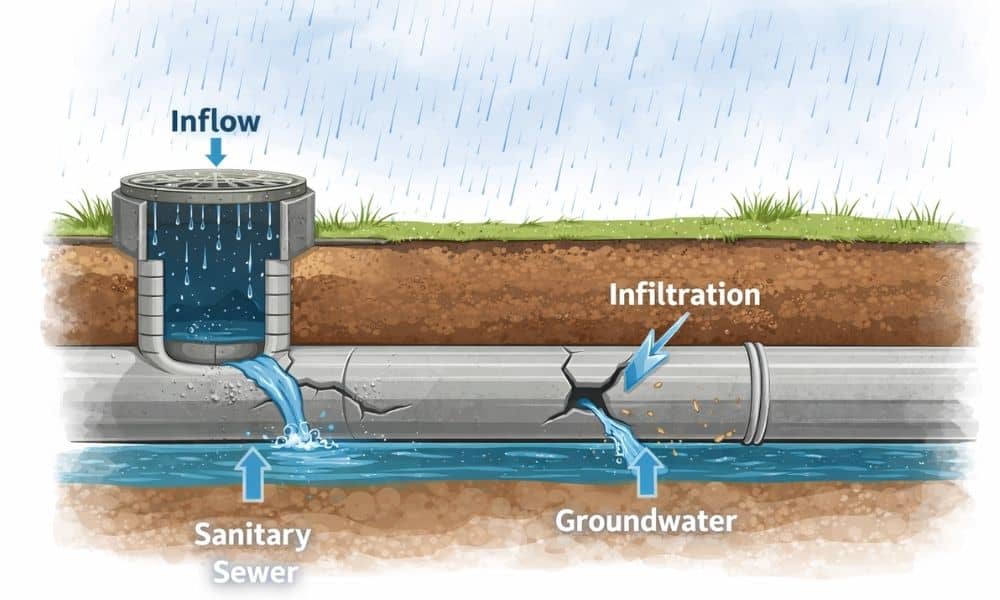
Inflow and Infiltration (I&I) occurs when stormwater or groundwater enters sanitary sewer pipes through cracks, faulty manholes, or improper connections. Excessive I&I can overload sewer systems and increase treatment costs. According to the City of Irving Water Utilities Design Standards, engineers use watertight manholes, sealed pipe joints, and proper utility separation to help minimize these unwanted flows. […]
Minimum Vertical Separation at Utility Crossings
According to the City of Irving utility standards, minimum vertical separation must be maintained where water and sewer lines cross to reduce contamination risk.
Infrastructure Spotlight: Sewer Manholes
They may look like simple lids in the street, but sanitary sewer manholes play a critical role in Irving’s wastewater system. According to the City of Irving Water Utilities Design Standards, manholes are required at set intervals and at changes in direction or grade to allow inspection, maintenance, and cleaning of sewer mains. These structures […]
Irving TxDOT Driveway Permits
According to TxDOT regulations, a driveway permit is an authorization allowing construction or modification of access to a state-maintained roadway. Requirements include sight distance and drainage.
Irving’s Urban Population
According to the U.S. Census Bureau QuickFacts (July 2024 estimate), Irving has a population of about 250,000. Its dense urban area demands strong transportation networks and drainage systems.
Understanding Underground Detention Ponds
According to Wikipedia, an underground detention pond is a stormwater management system designed to temporarily store runoff during heavy rainfall and release it slowly to prevent flooding and erosion. These systems are typically constructed beneath parking lots or open spaces and help reduce surface water impacts while allowing land above to remain usable. Underground detention […]
Irving’s Geographic Footprint and Urban Demands
Irving spans about 67 square miles, according to the U.S. Census Bureau (2020 land area: 66.98 sq mi). Its urban footprint demands robust transportation networks, drainage solutions, and utility expansions to accommodate density.